
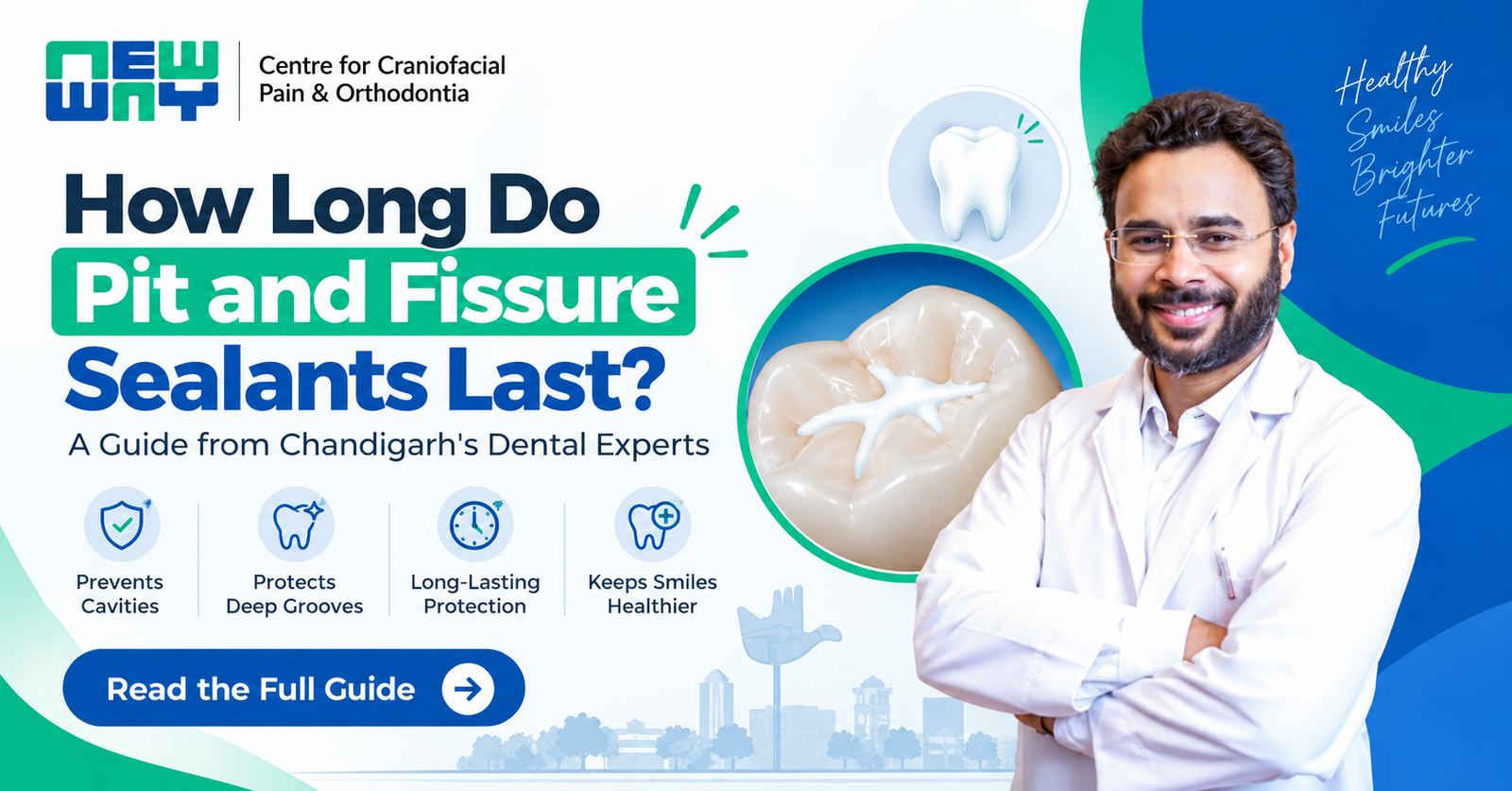
How Long Do Pit and Fissure Sealants Last? A Guide from Chandigarh's Dental Experts
NewWay Orthodontic Team
Updated September 2026 · Chandigarh & Mohali
Introduction
The chewing surfaces of your back teeth are not always smooth. They contain tiny grooves and depressions where food particles and plaque can easily collect. Even regular brushing may not completely clean these narrow areas, especially when the grooves are deep.
This is where a Pit and Fissure Sealant can make a useful difference. A sealant creates a thin protective layer over the grooves of teeth, helping keep food and bacteria from settling in areas that are difficult to clean.
But how long does this protection actually last? Is a sealant a one-time treatment, or does it need to be checked and replaced over the years? Understanding its expected lifespan can help you make better decisions about preventive dental care.
Want an Experienced Specialist's Opinion?
Our MDS Orthodontists offer a FREE consultation.
What Are Pit and Fissure Sealants?
Pit and fissure sealants are protective dental materials applied to the grooves and pits found mainly on the chewing surfaces of molars and premolars. These areas can be particularly vulnerable to decay because their shape makes them harder to clean thoroughly.
During a Pit and Fissure Sealant procedure, the dentist cleans and prepares the tooth before applying the sealant. The material is then hardened, usually with a special curing light, to form a protective coating over the targeted surface.
The treatment is generally quick and does not involve drilling healthy tooth structure. For children and teenagers in particular, sealants can be a practical part of a preventive dental care routine.
Digital X-Rays
ITero Lumina Scanning
Sterilization
Painless Treatments
How Long Do Pit and Fissure Sealants Last?
A well-placed sealant can often remain effective for several years. However, there is no fixed expiry date that applies to every patient. The lifespan depends on factors such as the tooth’s location, chewing habits, oral hygiene and how well the material remains bonded.
A Pit and Fissure Sealant may continue providing protection for many years when it stays intact. Some sealants can last five years or longer, while others may wear down sooner and require repair or replacement.
This is why dentists do not simply apply a sealant and forget about it. During routine examinations, the dentist can check whether the coating is still covering the grooves properly.
Need Expert Dental Advice?
Speak to Our Specialists – FREE Consultation
What Affects Their Lifespan?
Several everyday factors can influence how long a sealant remains in good condition.
Chewing Pressure
Back teeth handle considerable pressure while chewing. Constant force from hard or crunchy foods can gradually wear down the protective material.
Oral Hygiene
Sealants provide an additional layer of protection, but they do not replace brushing and flossing. Keeping your teeth clean helps protect the surrounding areas from plaque and decay.
Tooth Location
Molars generally experience more chewing pressure than other teeth. As a result, sealants placed on heavily used teeth may need closer monitoring.
Tooth Grinding
People who regularly clench or grind their teeth may put additional stress on dental restorations and protective materials, potentially affecting their longevity.
Regular Dental Visits
Routine examinations make it easier to spot small areas of wear before they become a bigger concern. Your dentist can determine whether a Pit and Fissure Sealant is still intact or needs attention.
Do Sealants Need to Be Replaced?
Not automatically. If a sealant is still covering the grooves properly and there are no signs of damage, your dentist may simply continue monitoring it.
However, a damaged or partially worn sealant may no longer provide complete coverage. In such cases, the dentist may recommend repairing or replacing it rather than waiting for decay to develop.
The good thing about regular monitoring is that small problems can often be managed early. A Pit and Fissure Sealant should therefore be viewed as part of ongoing preventive care rather than a permanent coating that never needs checking.
Signs That a Sealant Needs Attention
You may not always notice when a sealant has worn away. Unlike a filling, a sealant can be very thin, making changes difficult to spot without a dental examination.
Your dentist may recommend checking or replacing it if:
- A section of the sealant has chipped or worn away
- The protective coating no longer covers the full groove
- Food repeatedly gets trapped around the treated area
- New staining or suspected decay appears
- The tooth becomes sensitive or uncomfortable
- The sealant has become loose or partially detached
A Pit and Fissure Sealant should be assessed as part of regular dental examinations, particularly when it has been several years since the original application.
Concerned About Your Oral Health?
Book a Free Consultation
Are Pit and Fissure Sealants Suitable for Everyone?
Sealants are commonly used for children and teenagers because their newly erupted permanent molars can have deep grooves that are difficult to clean. Adults may also benefit from them when their teeth have deep pits and fissures or a higher risk of decay.
However, the decision depends on the condition of the tooth. A dentist will first examine the surface to determine whether sealing is appropriate.
If decay is already present, a sealant may not be the right solution. Depending on the situation, the tooth could require a different form of treatment.
Choosing the best dental clinic in Chandigarh can help ensure that preventive treatments are recommended only after an appropriate examination.
Why Regular Dental Check-Ups Matter?
Even the best Pit and Fissure Sealant cannot eliminate the need for regular dental care. Sealants protect specific surfaces, while cavities can also develop between teeth, near the gumline or in other areas that remain exposed.
Regular check-ups allow your dentist to examine both sealed and unsealed surfaces. They can also monitor changes in your bite, gums and overall oral health.
For families, routine dental visits are particularly useful because children may not recognise early signs of tooth decay. A dentist can identify potential problems before they become painful or require more extensive treatment.
Wondering If It's Time for Gum Surgery?
Our MDS Orthodontists offer a FREE consultation.
Expert Tip for Longer-Lasting Sealants
One simple way to get more from a sealant is to treat it as an extra layer of protection, not a substitute for daily dental care.
Brush twice a day with fluoride toothpaste, clean between your teeth, avoid constantly snacking on sugary foods and attend regular dental appointments. These habits help protect the teeth around the sealed surfaces as well.
Dr. Sombir Singh recommends a personalised approach to dental care, because the right preventive treatment can vary according to a patient’s age, tooth structure and oral health needs.

Final Thoughts: Protect Teeth Before Cavities Start
Pit and fissure sealants can provide valuable protection to the grooves of back teeth, particularly where brushing may not reach effectively. With proper oral hygiene and regular dental examinations, a sealant can remain useful for several years.
There is no single lifespan that applies to every patient. Some sealants remain intact for a long time, while others may need repair sooner because of chewing pressure, wear or other factors.
If you are considering a Pit and Fissure Sealant in Chandigarh, choose a dental team that focuses on prevention as well as treatment. NewWay Orthodontic provides a range of dental and orthodontic care options to help patients maintain healthier smiles.
Ready to Protect Your Smile?
Do not wait for a cavity to appear before thinking about preventive dental care. Schedule a dental examination to find out whether sealants could be suitable for you or your child and whether any existing sealants need checking.
📋 In This Article
- Introduction
- What Is Dental Scaling and Polishing?
- Why Is Dental Scaling and Polishing Important?
- What Happens During a Scaling and Polishing Treatment?
- How Often Should You Get Your Teeth Professionally Cleaned?
- Signs You May Need Dental Scaling and Polishing
- Dental Scaling vs Regular Brushing
- Is Dental Scaling and Polishing Painful?
- Benefits of Professional Teeth Cleaning
- Who Should Consider Dental Scaling and Polishing?How to Maintain Clean Teeth After Treatment
- Choosing the Right Dental Clinic for Scaling and Polishing
- Why Professional Dental Care Matters?
- Final Thoughts: Keep Your Smile Clean and Healthy
- Frequently Asked Questions
Book a FREE Consultation
Takes 30 seconds · No Upfront payment required
— Book Your —
APPOINTMENT
⭐ Trusted Family Dentist in Chandigarh & Mohali⭐
Need Help Now?
Ready to Get Started?
Experience the NewWay Difference
FAQs
1. How long do pit and fissure sealants usually last?
Pit and fissure sealants can last several years, although their lifespan differs from person to person. Chewing pressure, oral hygiene, tooth location and everyday wear can affect them. Regular dental check-ups help identify damaged or worn sealants early, allowing timely repair or replacement when necessary.
2. Can adults get pit and fissure sealants?
Yes, adults can benefit from sealants when their teeth have deep grooves that are difficult to clean or when they have an increased risk of cavities. A dentist will examine the tooth first to determine whether sealing the surface is appropriate and worthwhile.
3. Does getting a pit and fissure sealant hurt?
The procedure is generally comfortable because it does not usually require drilling into healthy tooth structure. The dentist cleans and prepares the tooth before applying the material. A Pit and Fissure Sealant can usually be completed quickly during a routine dental appointment.
4. Can a sealant fall off or wear away?
Yes, a sealant can partially wear away, chip or become detached over time. This does not necessarily mean something went wrong during treatment. Chewing forces and everyday use can affect the material. During routine examinations, your dentist can check its condition and recommend appropriate maintenance.
5. Do children still need to brush if they have sealants?
Absolutely. Sealants protect the grooves they cover but do not protect every surface of a tooth. Children should continue brushing twice daily with fluoride toothpaste and cleaning between teeth as advised. Regular dental visits also help monitor sealants and detect early signs of decay.